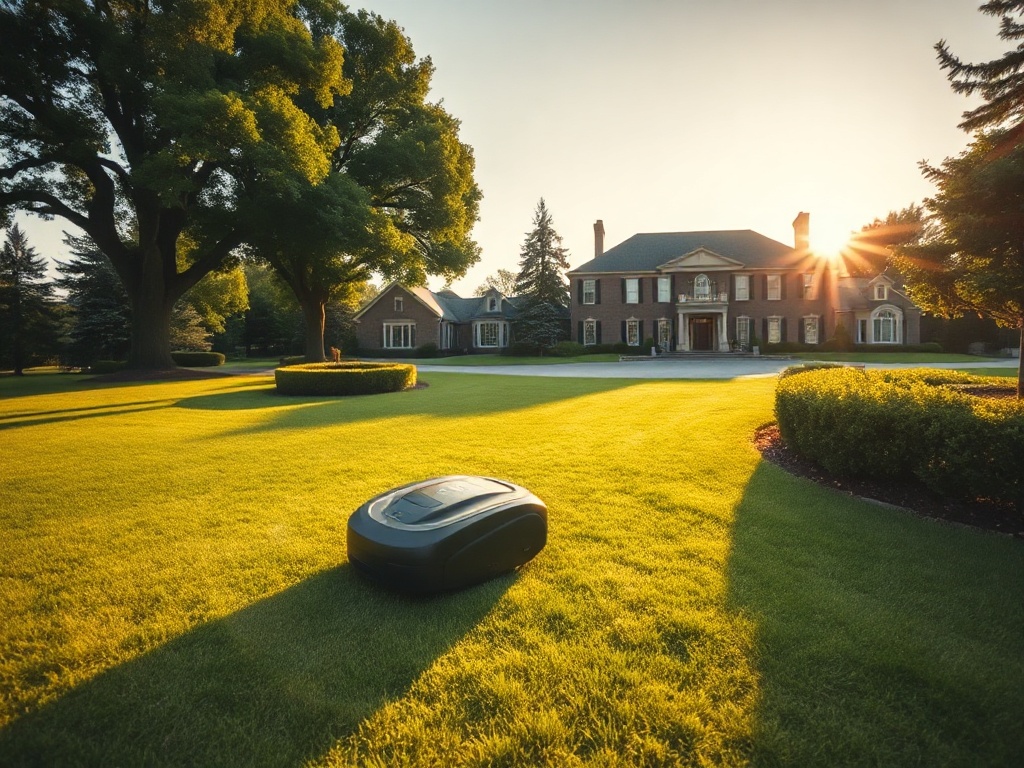
Where Robotic Mowers Fit on a Large Estate
Most of the acreage on a 5–25 acre residential estate is autonomous-cuttable — the wide lawn panels and corridor zones where 24/7 daily-cut frequency produces the largest aesthetic and labor gains.
The pitch for a commercial robotic fleet on a private estate is fundamentally different from the residential "set it and forget it" framing. Estate owners care about three things at once: a manicured look that matches the property's value, nonstop coverage of the broad acreage without payroll overhead, and a noise profile that doesn't disturb the residents, the neighbors, or the wildlife. The question isn't whether a robot can mow well enough — the question is which zones can we hand off without compromising the daily visual standard, and how much labor and weekend time does that free up.
The answer lays out clearly across a typical large estate:
- Long private driveways and tree-canopy transitions (~5–10% of mowed acreage). The connective tissue of the property — the bands alongside driveways and beneath mature tree lines. RTK GPS handles this segment as long as you mount a reference station with clear sky view; the daily-cut pattern keeps driveway-edge turf crisp instead of the patchy look that comes with weekly hand-trimming.
- Broad lawn panels and field-style clearings (~70–80%). The bulk of the visible lawn is wide-open short-cut turf where the dominant visual variable is frequency of cut, not pattern precision. Robotic daily-cut outperforms weekly crew visits on color, density, and thatch management.
- Steep grade and woodland edges needing AWD (~10–15%). All-wheel-drive autonomous platforms handle the slopes that put estate crew members at injury risk; woodland-edge cuts consistent without the traction-loss scares that come with walk-behind slope mowing.
What commercial autonomous platforms still don't do well today is the detail-gardener tier: ornamental garden beds, topiary accents, formal garden parterres, and the beds around statuary or specimen plantings. Those still require operator precision because the cutting height tolerance, the bed-edge trim line, and the pattern of detail work are too tight for current autonomous platforms. In practice, an estate deployment runs 24/7 on the high-acreage zones while the grounds staff shifts focus to the detail tier — and that's where the labor-cost story comes from.
What Large Estates Need From a Commercial Mower
Seven operating dimensions matter for an estate deployment — coverage, slope, RTK precision under canopy, durability, noise, fleet software, and multi-zone scheduling.
| Dimension | Large-Estate Requirement | Why It Matters |
|---|---|---|
| Coverage per cycle | 5–25 acres split across 2–4 zones | Allows a 2–4 unit fleet to handle full property autonomy over a 24-hour cycle with automatic dock handoffs. |
| Slope handling | 35–70% maximum slope | Woodland-edge cuts and graded driveway banks demand high-traction AWD platforms — walk-behind failure here is a workers' comp event. |
| RTK GPS precision | Centimeter-class with tree-canopy reliability | Mature tree canopy shadows the sky view for a reference station; 4G cellular telemetry plus a robust RTK base keeps multi-zone schedules reliable on the lawn panels nearest the tree lines. |
| IP rating | IPX5 sealed chassis | Morning dew, post-irrigation runs, and wet grass clippings punish unsealed chassis. IPX5 or better is the floor. |
| Noise level | < 60 dB at 10 m | Estates often share property lines with neighbors and frequently host outdoor events; the unit needs to be quieter than a casual conversation at 10 meters. |
| Fleet management | Cloud dashboard with per-unit telemetry | Estate manager needs battery, blade wear, and route status across all units at a glance. Single-unit apps don't scale to a 2–4 unit estate fleet. |
| Multi-zone scheduling | Auto-handoff between charging docks | Charging docks distributed across the property prevent dead-head travel; a unit finishes zone A and moves itself to zone B without operator help. |
Recommended Mowers for Large Estates
Three platforms cover the bulk of US-available estate deployments in 2026 — paired by acreage profile and tree-canopy density.
The flagship commercial autonomous platform for large-zone mowing. CEORA cuts up to roughly 6 acres per day on a single charge, navigates with EPOS RTK reference-station accuracy, and runs on Husqvarna Fleet Services cloud software — a single dashboard where the estate manager sees every CEORA unit's battery, blade wear, route, and zone handoff. Standard choice for estates running 2+ unit fleets across broad lawn panels and field-style clearings.
Check CEORA on Amazon → Husqvarna brand hub →Kress's flagship commercial-grade platform handles 2.0+ acres per cycle with a 12-inch cutting deck and the same RTK reference-station model that CEORA uses. Mission Mega is well-suited to estates that want to mix broad-lawn mowing with driveway-band and ornamental-clear zone sections on smaller per-area tasks, and its KR-series hardware line shares accessories across the deployment. One of the few consumer-accessible commercial-grade wire-free platforms shipping to US customers with full estate-segment support.
Check Mission Mega on Amazon → Kress brand hub →The wire-free AWD specialist. Mammotion Luba 2 AWD runs Vision Fusion + RTK without a fixed reference station, making it ideal for estates where mounting a permanent RTK base isn't desirable — it self-calibrates per field. Rated for 80% slope handling, it tackles the woodland-edge steep cuts where CEORA's lower-traction wheels can't safely operate, and pairs naturally with a CEORA or Mission Mega fleet on the broad-lawn panels.
Check Luba 2 AWD on Amazon → Luba 2 AWD review → Mammotion brand hub →On-Estate Scenes
Three zones that show up on a typical estate deployment plan — private driveway cutting, tree-canopy perimeter, and ornamental bed transitions.
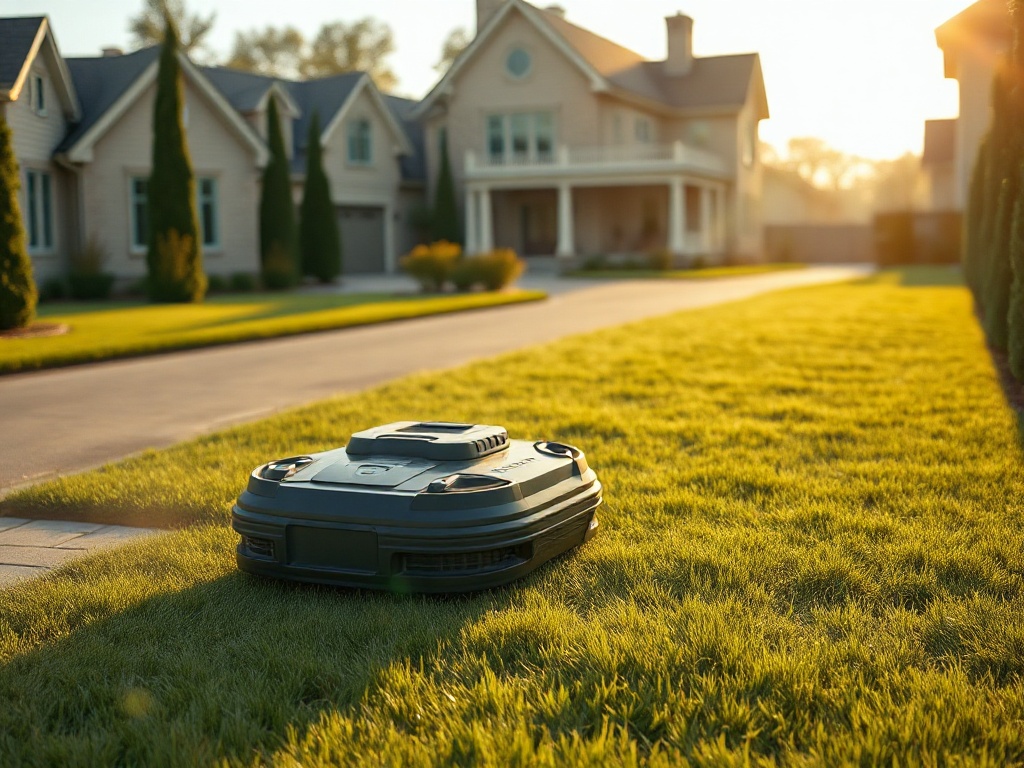
Driveway-edge bands run for hundreds of feet on a large estate and are the most visible cut from any visitor approach. Daily autonomous cutting keeps the edge crisp without a weekly detail crew visit.
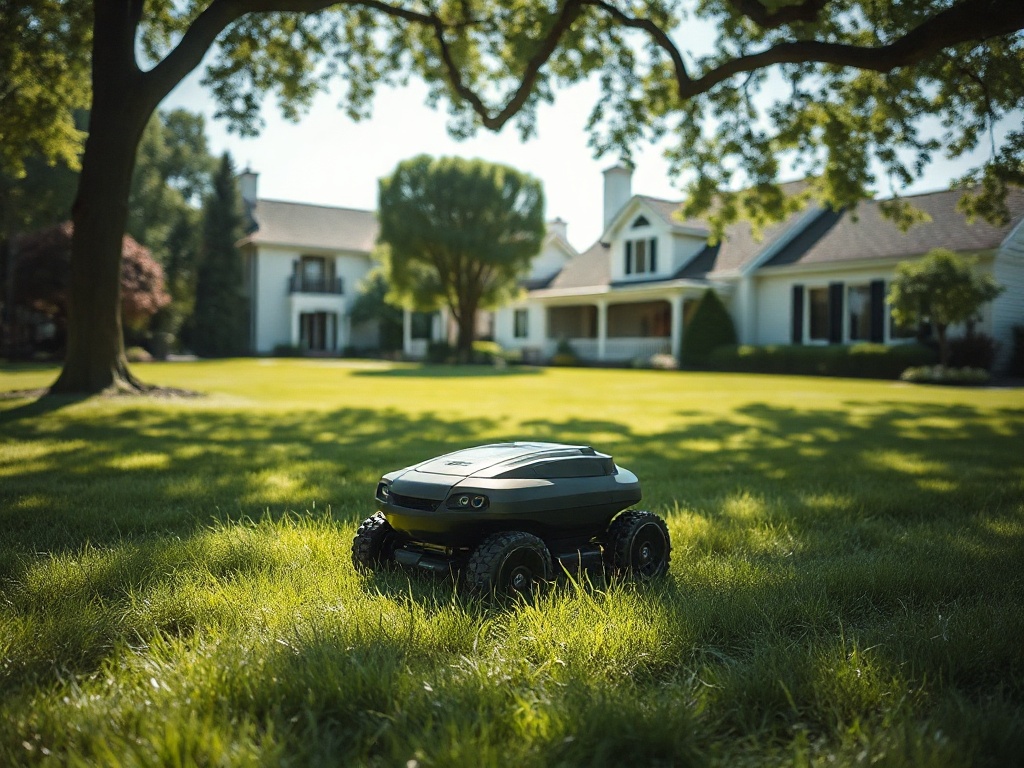
Mature shade trees shadow RTK signal; Vision Fusion and per-field self-calibration are the practical answer. Wire-free boundary plus a robust reference-station placement keeps the canopy-edge zones reliable.
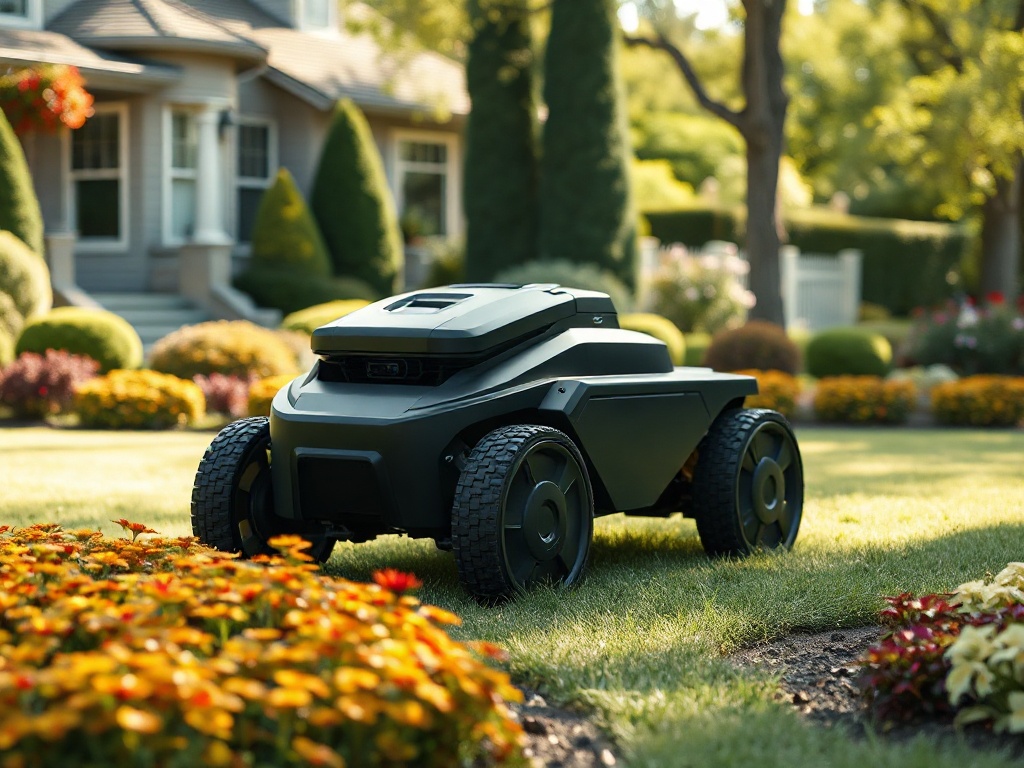
Ornamental bed surrounds are the limit of autonomous mowing today — the robot maintains the turf collar without crossing into the bed. Edge exclusion zones keep the bed, the statuary, and the irrigation undisturbed.
ROI on a Large-Estate Fleet
A typical 2–4 unit CEORA + Luba 2 AWD fleet on a 10–15 acre estate pays back against the grounds-staff and contract-crew budget in 2–4 years.
1. Labor-Cost Avoidance
A 2–4 unit fleet run by a single grounds manager replaces the bulk of weekly estate mowing labor that historically took a 2–4 person contract crew. Most owners consolidate that into daily autonomous runs plus a small detail-gardener team focused on ornamental beds, topiary, and statuary surrounds.
2. Fuel & Insurance Savings
Battery-electric autonomous operation replaces the gas-powered estate mowers and ride-on units that account for the bulk of estate grounds-keeper fuel spend. Workers' comp exposure on steep woodland-edge slopes — historically one of the higher injury-rate tasks on a residential property — drops with operator-robot substitution.
3. Turf-Quality & Daily-Cut Gains
Daily-cut frequency on broad lawn panels produces visibly denser, healthier turf than weekly crew visits. The aesthetic difference shows up in the property's curb appeal, in event preparation, and in any future resale conversation — properties with consistently maintained grounds carry a premium.
The conservative purchase framing: a 2–4 year payback against the displaced mowing-crew budget, with 5–7 year cumulative estate savings often landing in the $50,000–$200,000 range versus the manual baseline. Estates that pair the deployment with a deliberate contract-crew reduction see the shortest paybacks. Estates that add the fleet but keep the same contract headcount see longer ones — those are usually properties where the freed-up detail-staff time is redirected to enhanced ornamental-garden maintenance rather than headcount cuts.
Considering a robotic fleet for your property? Our commercial-robotics directory connects estate owners with vetted installation and service partners — no sales calls required.
Browse the Service Provider Directory →