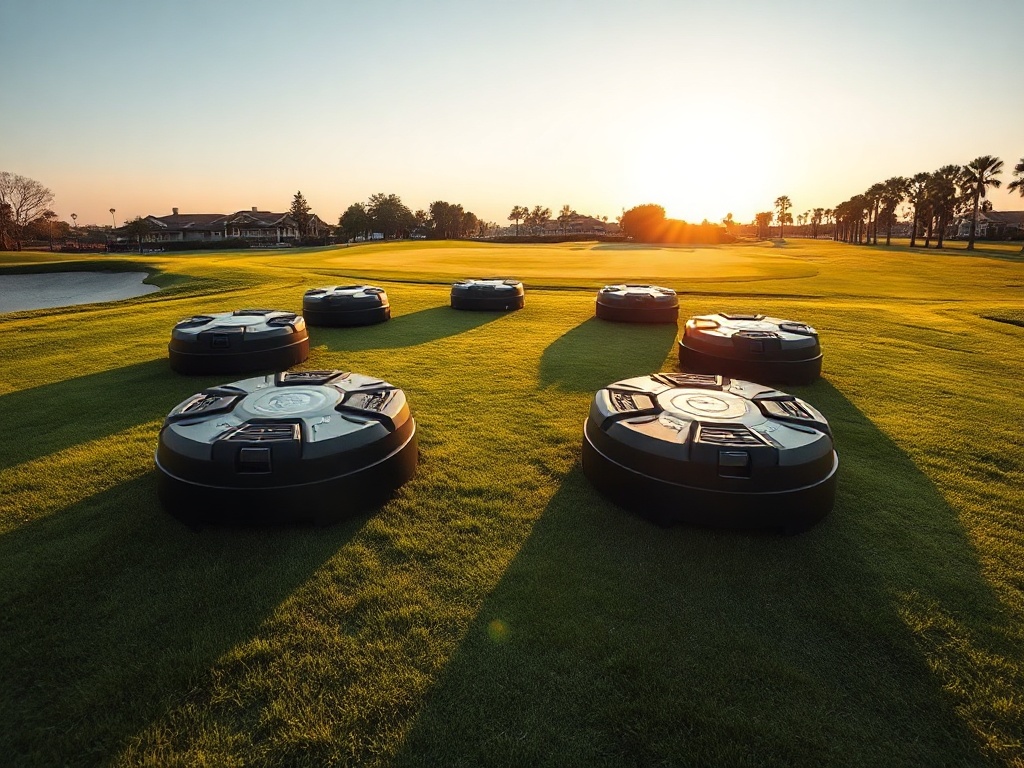
Where Robotic Mowers Fit on a Golf Course
Most of the acreage on an 18-hole facility is autonomous-cuttable — the high-frequency zones where 24/7 robotic operation produces the largest labor savings.
The pitch for a commercial robotic mower on a golf course is fundamentally different from the residential "set it and forget it" framing. Golf operations are paid for member experience, course condition, and labor efficiency all at the same time. The question isn't "will the robot mow well enough?" — precision greensmowers have been doing that for a century. The question is "which zones can we take off the manual crew's plate without compromising play, and how much labor does that free up?"
The answer lays out clearly across an 18-hole facility:
- Fairway surrounds and approaches (~50–60% of mowed acreage). The bulk of the visible course is wide-open short-cut turf where the dominant turf-health variable is frequency of cut, not pattern aesthetics. Robotic daily-cut outperforms weekly crew visits on color, density, and thatch management.
- Roughs (~15–20%). Tall fescue, bluegrass, and rye roughs at 2–4 inch cut height are well-suited to autonomous cutting — the precision requirement is loose enough that RTK GPS plus a wire-free boundary is sufficient.
- Bunker faces and steep slope collars (~5–10%). All-wheel-drive autonomous platforms handle the slopes that put grounds-crew operators at injury risk; turf collars around bunkers cut consistently without the traction-loss scares that come with walk-behind slope mowing.
What commercial autonomous platforms still don't do well today is the operator-required precision tier: greens, tee boxes, and the sand itself. Greens cut at 0.100–0.125 inches with alternating-direction striping is still walk-cut territory. Tee boxes can be mowed autonomously at the higher tee-box height, but most operations reserve them for the precision crew to keep striped aesthetics consistent. Bunker sand is out of scope entirely. In practice, a deployed fleet runs 24/7 on the high-acreage zones while the grounds crew shifts focus to the precision tier — and that's where the labor-cost story comes from.
What Golf Courses Need From a Commercial Mower
Seven operating dimensions matter for a golf-course deployment — coverage, slope, RTK precision, durability, noise, fleet software, and multi-zone scheduling.
| Dimension | Golf-Course Requirement | Why It Matters |
|---|---|---|
| Coverage per cycle | 1.5–3 acres per unit per day | Allows 4–6 units to cover a full 18-hole facility's autonomous-cuttable acreage in a single 24-hour cycle. |
| Slope handling | 35–70% maximum slope | Bunker-face collars and mounded fairway surrounds demand high-traction AWD platforms — walk-behind failure here is a workers' comp event. |
| RTK GPS precision | Centimeter-class with 4G fallback | Bunker-collar exclusion zones, fairway-to-rough boundary lines, and multi-zone schedules depend on centimeter accuracy with cellular telemetry for off-canopy reliability. |
| IP rating | IPX5 sealed chassis | Daily morning dew, post-irrigation runs, and wet grass clippings punish unsealed chassis. IPX5 or better is the floor. |
| Noise level | < 60 dB at 10 m | Nighttime mowing is the dominant deployment pattern; the unit needs to be quieter than the closest accommodation or member residence. |
| Fleet management | Cloud dashboard with per-unit telemetry | Superintendent needs battery, blade wear, and route status across all units at a glance. Single-unit apps don't scale to a 4–6 unit fleet. |
| Multi-zone scheduling | Auto-handoff between charging docks | Charging docks distributed across the course prevent dead-head travel; a unit finishes zone A and moves itself to zone B without operator help. |
Recommended Mowers for Golf Courses
Three platforms cover the bulk of US-available golf-course deployments in 2026 — paired by use case and slope profile.
Comparing the listed equipment options? Use our robotic mower comparison tool and read our Yarbo vs. Kress robotic mower comparison before choosing a fleet.
The flagship commercial autonomous platform for fairways and large-zone mowing. CEORA cuts up to roughly 6 acres per day on a single charge, navigates with EPOS RTK reference-station accuracy, and runs on Husqvarna Fleet Services cloud software — a single dashboard where the superintendent sees every CEORA unit's battery, blade wear, route, and zone handoff. Standard choice for courses running 4+ unit fleets across fairway surrounds and approaches.
Check CEORA on Amazon → Husqvarna brand hub →Kress's flagship commercial-grade platform handles 2.0+ acres per cycle with a 12-inch cutting deck and the same RTK reference-station model that CEORA uses. Mission Mega is well-suited to courses that want to mix fairway mowing with rough and approach zones on smaller per-area tasks, and its KR-series hardware line shares accessories across the deployment. One of the few consumer-accessible commercial-grade wire-free platforms shipping to US customers with full golf-segment support.
Check Mission Mega on Amazon → Kress brand hub →The slope specialist. Automower 535 AWD is rated for 70% (~35 degree) slope handling with pivot-style AWD traction that lets the unit reverse out of a bunker face if grip breaks. The right pick for courses that want autonomous mowing specifically on sloped bunker collars and mounded fairway surrounds where CEORA's lower-traction wheels can't safely operate. Pairs naturally with CEORA on the flat-zone fleet and handles the steep-tier zones.
Check 535 AWD on Amazon → Husqvarna brand hub →Where the Fleet Actually Runs
Three zones that show up on a typical deployment plan — fairway edge, bunker-face slope, and tall rough cut.

Daily-cut frequency on the fairway-surround band is the dominant turf-health lever, and the cleanest place for autonomous deployment. RTK boundary maps the precise edge between fairway and rough for repeatable striping.
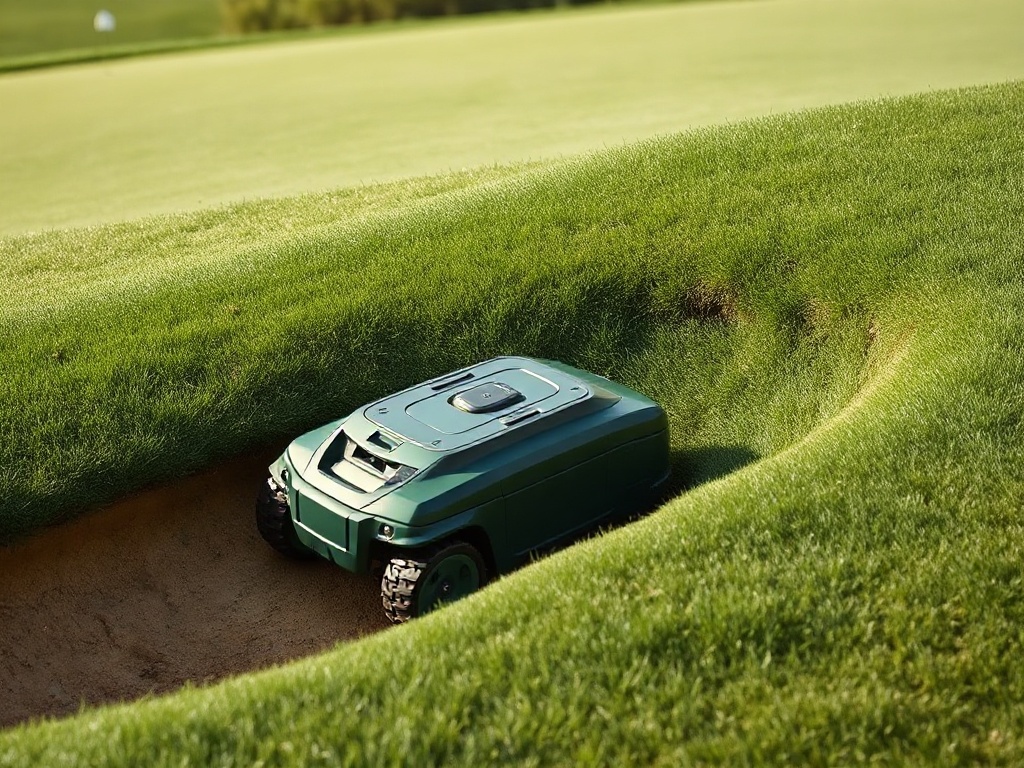
AWD platforms like the 535 AWD handle bunker-face slopes that put walk-behind operators at injury risk. Exclusion zones around the sand itself keep the mower on the turf collar, not the trap.
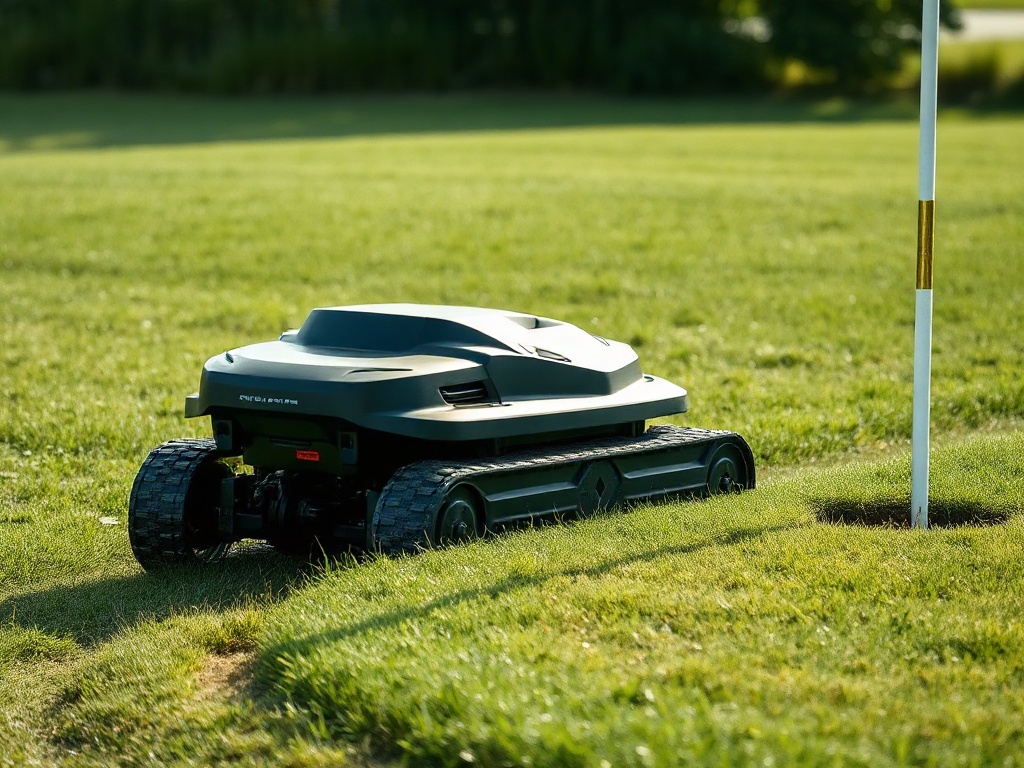
Rough zones at 2–4 inch cut height have a looser precision requirement than fairways, so wire-free RTK plus scheduled nightly runs handle the entire rough band with minimal operator oversight.
ROI on a Five-Unit Golf-Course Fleet
A typical 4–6 unit CEORA + 535 AWD fleet on a US 18-hole facility pays back against the manual fairway-crew budget in 2–4 years.
1. Labor-Cost Displacement
A five-unit fleet run by a single operator replaces the bulk of fairway-surround mowing labor that historically took a 4–6 person crew. Most operations consolidate that into one overnight autonomous run plus a small daytime grounds team focused on greens and tees.
2. Fuel & Insurance Savings
Battery-electric autonomous operation replaces the gas-powered fairway units that account for the bulk of grounds-crew fuel spend. Workers' comp exposure on steep bunker-face slopes — historically one of the highest injury-rate tasks on a golf course — drops with operator-robot substitution.
3. Turf-Quality Gains
Daily-cut frequency on fairway surrounds and approaches produces visibly denser, healthier turf than weekly crew visits. The aesthetic difference shows up in member surveys and pace-of-play conversations — both revenue lines.
The conservative purchase framing: a 2–4 year payback against the displaced mowing-crew budget, with 5–7 year cumulative course savings often landing in the $200,000–$500,000 range versus the manual baseline. Courses that pair the deployment with a deliberate crew-size reduction see the shortest paybacks. Courses that add the fleet but keep the same crew headcount see longer ones — those are usually facilities where the freed-up operator time is redirected to enhanced greens detail rather than headcount cuts.
Frequently Asked Questions
Commercial robotic mowers handle fairway surrounds, approaches, and roughs reliably today — the high-acreage, daily-cut zones where 24/7 autonomous operation produces the largest labor savings. Greens, tees, and bunker sand remain in the operator-managed precision scope because cutting height tolerance, traction management, and pattern aesthetics are too tight for current autonomous platforms. A typical 18-hole course has roughly 60–80% of its total mowed acreage in autonomous-cuttable zones and 20–40% in operator-required precision zones.
Yes — quiet battery-electric operation, low-vibration cut patterns, and IPX5-sealed chassis make overnight autonomous mowing the most common deployment pattern on golf courses. Most golf operations schedule CEORA and Kress fleet runs between 9pm and 6am, leaving daylight hours for grounds crews to focus on greens, tees, and member play. Sound levels are typically well below the 60 dB noise-floor complaints that come from early-morning gas-powered equipment runs.
All-wheel-drive platforms like the Husqvarna Automower 535 AWD are rated for slopes up to 70% (~35 degrees) and pivot-style traction management lets them reverse out of a bunker face if traction breaks. However, autonomous slope mowing in bunker surrounds still requires pre-mapped exclusion zones around the sand itself — the robot cuts the turf collar but stays out of the sand. It is best practice to map bunker-face cut as a separate zone from fairway cut so blade wear, schedule, and reporting can be tracked independently.
Before a run, confirm the course or zone is empty, verify mapped exclusion zones and secured routes, and complete supervised commissioning and recovery checks. Pause for play, events, or unsafe turf or weather, and resume only after the grounds lead confirms the route is clear and turf is firm.