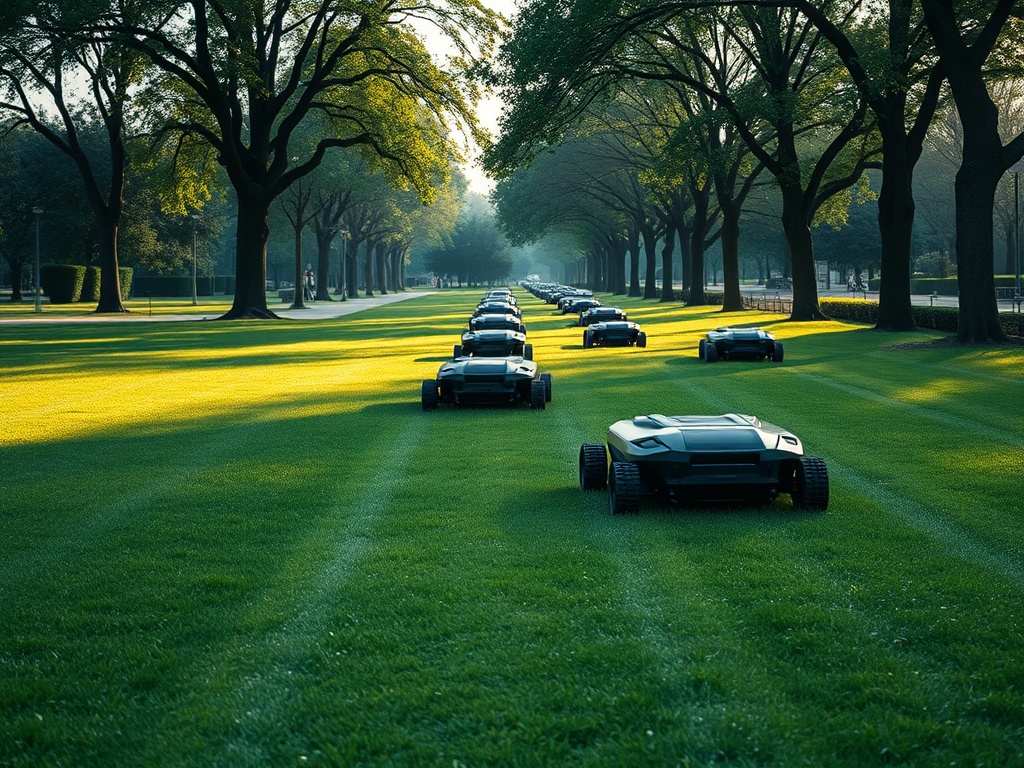
Use the guide as an operating checklist
A robotic mower is only as reliable as the field map, schedule, and handoff rules around it. Start with a controlled pilot, document the route, and expand one field at a time.
1. Survey the site
Separate broad autonomous acreage from logos, infield skin, mounds, goal areas, berms, and other precision zones.
2. Prove the map
Walk every boundary, dock approach, gate, slope, and RTK transition before the first unattended cut.
3. Schedule around play
Give each field a cut height, daily window, blackout periods, and a rain-recovery rule that the whole crew can follow.
4. Sign off every shift
Check people, equipment, weather, signal, blades, and return-to-dock status before releasing a mower.
1. Complete the pre-deployment setup
Treat the first week as commissioning, not mowing. The goal is a field map and operating envelope that a second operator can understand without relying on tribal knowledge.
For equipment selection and planning, review the commercial robotic mower hub and robotic mower buyers guide to compare coverage, slope, and navigation tradeoffs. Use the robotic mower comparison tool to review shortlisted models side by side.
Survey the complex before placing hardware
- Walk each soccer or football pitch, baseball outfield, practice field, and stadium surround. Record turf species, normal cut height, drains, irrigation heads, curbs, fencing, berms, shade, and any area that routinely holds event equipment.
- Mark the precision handoff zones: center-circle logos, goal-crease touchlines, baseball infield skin edges, mound and baseline lips, warning-track transitions, and painted or sponsor-aligned details. Keep these with the detail crew unless testing proves an autonomous route safe and accurate.
- Measure the area that can actually be cut in the available overnight or closed-field window. A manufacturer acreage rating is a scheduling input, not a promise that one robot can cover every field in one charge.
Place the RTK reference station and docks
- Mount the RTK reference station on a fixed, secure point with broad sky visibility—often a maintenance building roof or a dedicated pole. Keep it clear of new bleachers, temporary grandstands, tall tree canopy, and structures that can block or reflect the signal.
- Place charging docks on firm, level approaches with drainage, service access, and a clear path from the mapped field. For a multi-field complex, distribute docks so a unit does not have to cross a spectator route or public road to reach its next zone.
- Label the dock, power isolation, mower, and zone ID. Photograph the as-built position so later fence, lighting, or construction work can be checked against the original map.
Map zones and complete a handoff test
Map each field as its own zone, then map safe corridors and no-go areas separately. Use a conservative boundary at first; expand only after a slow supervised pass confirms the mower clears goals, fencing, drains, dugouts, benches, and sideline furniture.
| Commissioning step | What to verify | Pass condition |
|---|---|---|
| Reference signal | RTK status at the dock, center of field, tree canopy, and far boundary. | Stable navigation status at every planned route transition. |
| Boundary walk | Virtual or wire boundary follows the playable grass and leaves precision zones out. | No route brings the deck into a goal, fence, infield lip, drain, or spectator path. |
| Dock handoff | Leave field, travel corridor, enter dock, charge, and resume behavior. | Unit returns without a manual push, missed gate, or public-route crossing. |
| Obstacle test | Use an approved test object; confirm bumper, obstacle-avoidance, lift, and tilt behavior. | Cutting system stops or diverts as documented, then records a clear event. |
| Operator handoff | Second grounds operator repeats the launch, pause, emergency stop, and recovery steps. | Both operators can explain the route, blackout, weather, and escalation rules. |
2. Build field-by-field mowing schedules
Keep the mower in a light, frequent cutting pattern. Schedule around field access and turf recovery, then reserve enough capacity for rain delays and event blackouts.
| Field or zone | Starting cut plan | Operating window | Scheduling notes |
|---|---|---|---|
| Soccer / football pitch | Set the deck to the agronomist's target, commonly 1.5–2.5 in for general field turf. | Overnight or early morning after the field closes. | Keep center-circle graphics, goal mouths, and touchline detail in a manual precision zone where needed. |
| Baseball outfield | Use the established outfield height and a frequent light cut. | After batting practice and before grounds crew setup. | Exclude infield skin, mound, baselines, warning-track edges, and any lip that can catch a wheel. |
| Practice / multi-sport field | Match the primary field's height unless the surface has a separate maintenance plan. | Stagger units so warm-up and practice windows stay open. | Give each field its own zone and blackout calendar instead of one complex-wide schedule. |
| Stadium surround / berm | Use a height appropriate to the surround; inspect traction before lowering the deck. | When pedestrian traffic and deliveries are lowest. | Use an AWD platform only within its published slope limit; keep seating edges and service roads excluded. |
Set blackout periods and fleet capacity
- Build blackout windows around matches, tournaments, batting practice, school arrival and dismissal, grounds setup, deliveries, and field-light maintenance. A mower that is technically available but blocks a crew or athlete is not available capacity.
- Reserve a recovery window after each event. The grounds lead should be able to pause a zone from the fleet dashboard and know which other field receives that unit next.
- Size the fleet from cuttable acreage, growth rate, available hours, charging time, and expected weather delays. Keep one unit or a manual plan available for recovery rather than scheduling every mower at 100% utilization.
- Review clippings, striping, missed strips, battery state, blade wear, and boundary events weekly. Adjust route direction or window before changing deck height to solve a scheduling problem.
3. Run a safety check before every cut
The pre-start inspection is the control that turns a good map into a safe operation. Make it visible, repeatable, and easy for a relief operator to complete.
| Check | Grounds-team action | Do not launch when... |
|---|---|---|
| People and access | Walk the route, confirm the field and travel corridor are empty, and check gates, spectator paths, and service roads. | A person, animal, vehicle, or open public access route can enter the mapped zone. |
| Goals, balls, and equipment | Remove balls, portable goals, nets, benches, tarps, hoses, drag mats, and event hardware, or confirm they are inside exclusions. | Loose equipment can roll into the route or a goal wheel can sit on the boundary. |
| Lift, tilt, and obstacle behavior | Review the last event log and perform scheduled supervised tests according to the mower manual. | A sensor event is unexplained, the deck does not stop, or obstacle behavior differs from the approved test. |
| Perimeter and navigation | Confirm boundary status, RTK quality, guide-wire fallback where used, dock power, and current zone selection. | Signal is unstable, a boundary was moved, construction changed the route, or the unit cannot reliably return. |
| Operator sign-off | Record date, unit, zone, weather, blackout status, and operator initials in the grounds log. | There is no accountable operator or no clear escalation path for a stop. |
Keep the emergency stop accessible. Everyone who works near the fleet should know how to stop a mower, isolate power, keep people clear, and contact the grounds lead. Never lift, clean, or inspect a mower until the cutting system is stopped and the manufacturer's service procedure is followed.
4. Handle dew, rain, heat, and lightning deliberately
Weather automation is a useful input, not a substitute for a turf decision. Wet soil, poor visibility, and fast-changing event conditions can make a technically navigable route unsuitable.
Dew and irrigation
Expect early-morning dew and irrigation cycles. If clippings clump or wheels begin marking the surface, pause and move the cut to a drier window.
Rain sensor or pause
Use the platform's rain-sensor behavior where documented. CEORA and Automower 535 AWD weather resistance does not mean they should cut saturated turf.
Lightning and heat
Follow the facility's lightning policy and stop outdoor operations when people must leave the field. In high heat, protect staff during inspections and check battery and motor warnings.
Safe resume
After rain, wait for a planned two-to-four-hour dry-out window, then walk the route for rutting, standing water, debris, and changed event access before resuming.
Use a simple weather decision
- Pause during active rain, lightning, flooding, or unsafe heat conditions. Do not rely on a cloud dashboard alone; the grounds lead owns the stop decision.
- Protect the surface. A weatherproof chassis can survive conditions that turf cannot. Keep mowers off saturated goal areas, low spots, infield edges, and newly irrigated routes.
- Resume only after inspection. Verify the field is empty, traction is normal, no wheel ruts are forming, the RTK reference station is online, and the next blackout has not begun.
- Document the recovery. Record the pause reason, dry-out time, skipped zones, and any manual catch-up cut so fleet capacity can be sized for the next storm.
5. Validate slopes and navigation before expansion
Sports complexes combine open grass with tree canopy, berms, narrow sideline banks, drains, and changing event infrastructure. Validate the hardest route first, not the easiest field.
| Site condition | Operating tip | Fallback or limitation |
|---|---|---|
| Sideline bank or berm | Measure the slope in both travel directions and test when the turf is dry. AWD is useful for traction, but route width and boundary distance still matter. | Stay below the platform's published slope limit and leave a manual strip where the boundary is too close to a drop or hard edge. |
| Tree canopy | Drive a supervised route under the canopy at different times of day and inspect RTK quality at the deepest point. | Shorten the zone, move the reference station if possible, add a boundary-wire fallback, or assign the area to an operator. |
| RTK transition | Use slow, repeatable routes between fields and keep reference-station visibility documented. | Do not treat a momentary signal recovery as proof of a safe unattended route; require a complete return-to-dock test. |
| Drain, curb, or hard edge | Map a generous exclusion and inspect after mowing, irrigation, and construction. | Never trim the exclusion simply to gain acreage if a wheel could drop, climb, or redirect the deck toward people. |
| Sideline and event access | Use a separate access corridor and schedule around officials, athletes, deliveries, and temporary fencing. | Pause the zone when the corridor is occupied; a manual perimeter cut is safer than crossing an active access route. |
Wire-free RTK platforms are strong candidates for repeatable open-field routes, while boundary-wire or guide-wire systems can be a practical fallback in difficult canopy and edge conditions. Choose the navigation method that remains predictable after the field fills with people, goals, tents, and temporary fencing.
Adjacent mower reviews and model limitations
Use the reviews below for adjacent platforms and homeowner-scale AWD or RTK context. They are not substitutes for commercial commissioning, service support, or a sports-field site survey.
 Husqvarna context
Large-yard Husqvarna review
Useful for navigation, weather, and Husqvarna ecosystem context. The reviewed 450X is not a CEORA replacement for multi-acre commercial field coverage.
Read Husqvarna review → Kress context
Kress Mission review
This adjacent Kress review helps with RTK and wire-free operating concepts; Mission Mega fleet capacity, service, and mapping should be verified separately.
Read Kress review →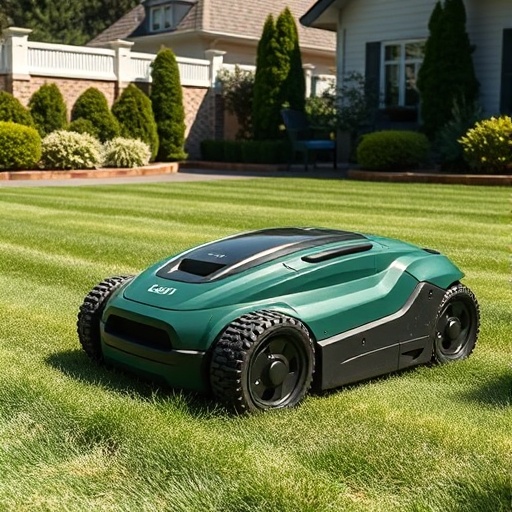 AWD / RTK context
Alternatives for smaller zones
Luba 2 AWD and Navimow X3 can inform smaller field or surround pilots, but do not assume their consumer-oriented service and capacity match a commercial fleet.
Read Luba 2 AWD review →Read Navimow X3 review →Frequently asked questions
Plan a daily or near-daily cut for active soccer and football pitches, baseball outfields, and practice fields, adjusting the window and height for growth, turf species, and events. The objective is to remove a small amount of leaf each pass rather than wait for a heavy cut.
Confirm the field is empty, goals and equipment are removed or excluded, gates are secured, the perimeter and mapped zones are correct, the dock and reference station have power and signal, and the mower passes a lift, tilt, obstacle, and return-to-dock test before the operator signs off.
Pause mowing during active rain and on saturated turf. Use the mower's rain behavior where available, then wait for a deliberate dry-out window—often two to four hours after rain stops—and resume only after a walk-through confirms that tires will not rut the surface or smear clippings.
Survey slopes before deployment, stay below the platform's published operating limit, mount the RTK reference station with clear sky visibility, validate routes under tree canopy, and use boundary-wire or operator-managed fallback zones where signal loss makes autonomous navigation unreliable.
Keep center-circle logos, goal-crease touchlines, baseball infield skin edges, mounds, baselines, warning-track transitions, tight berms, and any area with frequent event equipment in an operator-managed precision zone unless the site survey and handoff tests prove otherwise.