Updated March 2026
Best Budget Robot Mowers Under $1,000 (2026)
First-time buyer, small-to-medium yard, budget-conscious? You don't need to spend $2,000 to get a reliable robot mower. We analyzed 20+ models under $1,000 across owner reviews, spec sheets, and independent reports. These seven deliver the best value per dollar.
Quick-Pick Summary
Every model below is under $1,000. Jump to the one that fits your yard and budget.
| Model |
Coverage |
Navigation |
Noise |
Price |
Buy |
Best Overall Value |
0.25 acres |
GPS + Virtual |
58 dB |
~$649 |
Check Price → |
Best Wire-Based |
0.25 acres |
Boundary Wire |
62 dB |
~$699 |
Check Price → |
Best Compact |
0.06 acres |
Boundary Wire |
58 dB |
~$599 |
Check Price → |
Best Under $500 |
0.20 acres |
GPS + Virtual |
55 dB |
~$499 |
Check Price → |
Best Navigation |
0.13 acres |
RTK GPS + Vision |
55 dB |
~$799 |
Check Price → |
Premium Brand |
0.15 acres |
Boundary Wire |
61 dB |
~$999 |
Check Price → |
Most Affordable |
0.13 acres |
Boundary Wire |
63 dB |
~$399 |
Check Price → |
How We Pick: Our Budget Mower Criteria
Spending under $1,000 means every dollar matters. Here's what we weigh when ranking budget robot mowers.
Price-to-value ratio and yard coverage per dollar
Reliability and app quality
💵
Price-to-Value Ratio
Not just the sticker price — what you actually get per dollar. A $699 mower that covers 0.25 acres with smart navigation beats a $599 model limited to 0.06 acres for most buyers.
🏡
Yard Coverage per Dollar
We calculate acres-per-dollar for each model. Budget mowers range from 0.06 to 0.50 acres — matching coverage to your actual lawn prevents overspending or underperformance.
🔧
Reliability
Budget doesn't mean disposable. We prioritize models with strong owner-reported longevity, warranty coverage, and brands with established service networks. A mower that dies in year two isn't a deal.
📱
App Quality & Setup
A cheap mower with a terrible app is a frustrating mower. We test app responsiveness, scheduling features, and boundary setup. Wire-free models typically win on setup speed; wire models on precision.
Detailed Reviews
Eufy RoboVac E18 — Best overall value under $1,000 (with rain sensor)
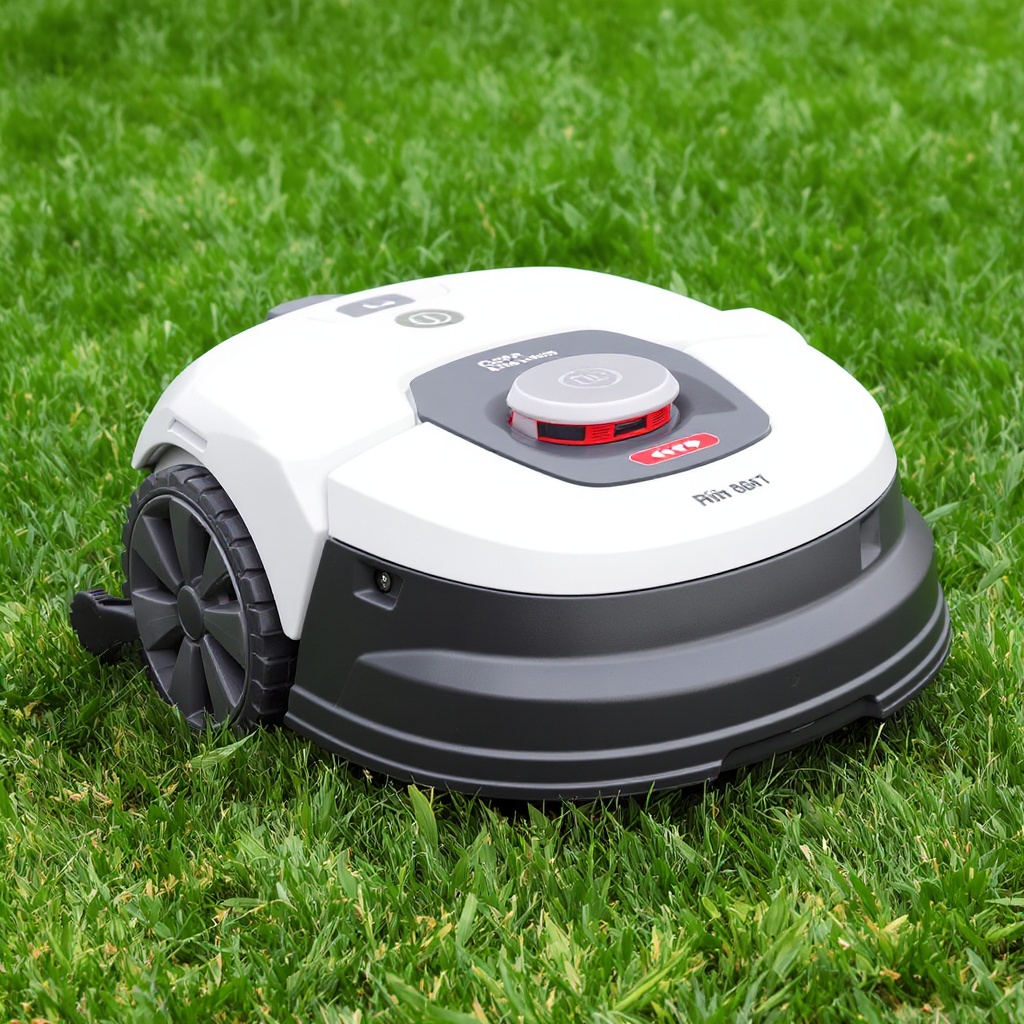
The E18 is the best all-around value under $1,000. Wire-free GPS boundary mapping eliminates the afternoon of burying wire. App setup takes 20 minutes, the AI obstacle avoidance handles garden hoses and toys reliably, and at 58 dB it won't annoy the neighbors. Coverage is honest on quarter-acre lots. For anyone who wants automated mowing without installation headaches and without spending premium prices, this is the pick. Read our full Eufy E18 review.
Key Specs
Coverage0.25 acres
NavigationGPS + Virtual
Noise58 dB
Max Slope30%
Battery~60 min
Rain SensorYes
Pros
- No boundary wire to install
- AI-powered obstacle avoidance
- Quiet 58 dB operation
- Solid app with flexible scheduling
- Rain sensor included at this price
Cons
- GPS accuracy drifts near tall hedges
- Not as precise at edges as wire models
- App requires account creation
Worx Landroid L — Best wire-based value under $1,000
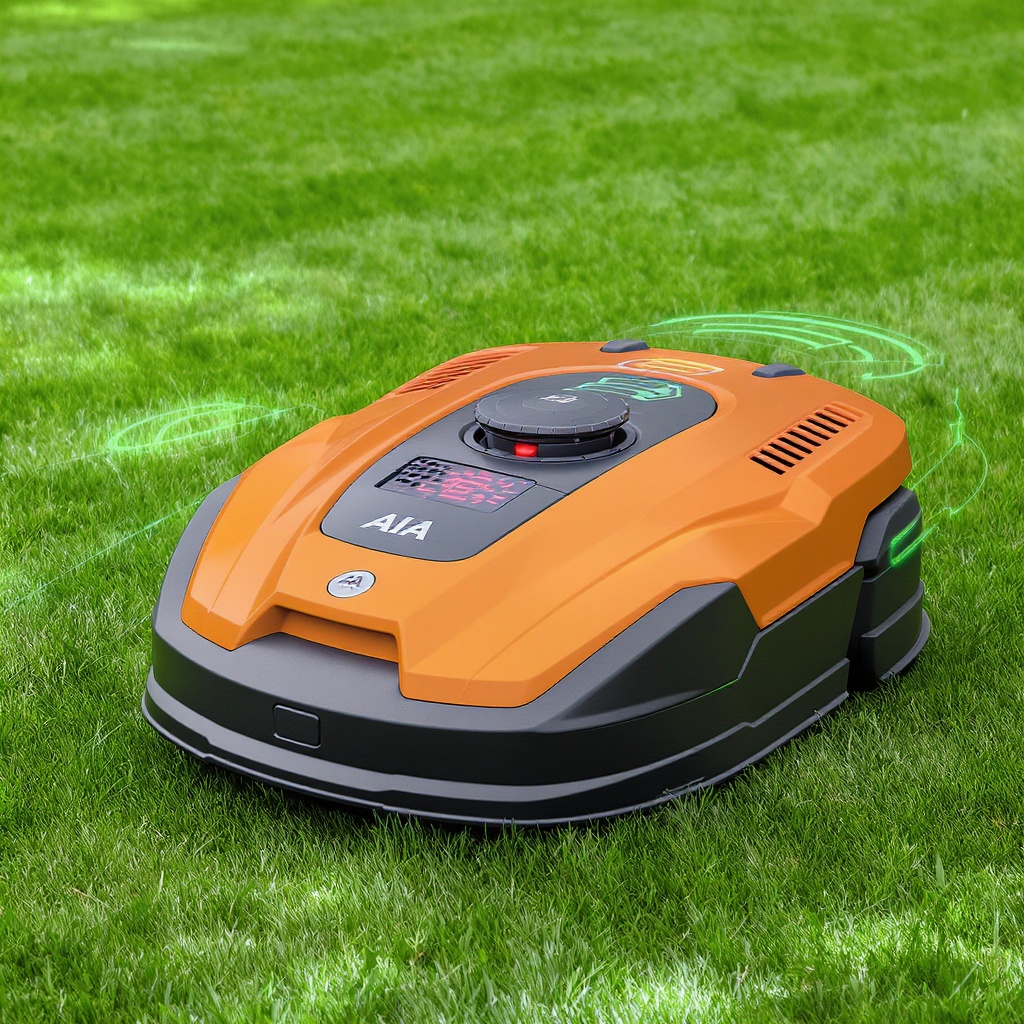
If you don't mind a couple hours of wire installation up front, the Landroid L delivers the best systematic mowing pattern of any budget model. Worx's AIA navigation cuts in planned rows instead of random bouncing — no missed strips, no over-mowed patches. The modular platform means you can add GPS tracking, an anti-theft alarm, or a voice-control module later without replacing the whole unit. At $699 with 0.25 acres of coverage and 35% slope handling, it's hard to beat on raw capability per dollar. Read our full Worx Landroid L review.
Key Specs
Coverage0.25 acres
NavigationWire + AIA
Noise62 dB
Max Slope35%
Battery~100 min
Rain SensorYes
Pros
- Systematic AIA navigation (no missed strips)
- Modular — add accessories over time
- Best slope handling in this price range (35%)
- Alexa and Google Assistant integration
- 100-minute battery life
Cons
- Boundary wire installation required (~2 hrs)
- Louder than GPS competitors at 62 dB
- Wire can break from garden tools
Gardena Sileno City — Best for tight, oddly shaped small yards
The Sileno City 250 is built for one thing: tiny yards done well. Gardena (owned by Husqvarna Group) brings serious engineering to a compact, 58 dB package that handles townhouse-sized lawns up to 2,700 sq ft (0.06 acres) with surprising precision. The SensorCut system creates a striped, carpet-like finish that GPS models struggle to match. It handles narrow passages down to 24 inches and has a built-in frost sensor that pauses mowing in cold conditions. Coverage is very limited — this is a niche pick for genuinely small urban lawns — but for that specific use case, it's polished.
Key Specs
Coverage0.06 acres
NavigationBoundary Wire
Noise58 dB
Max Slope25%
Battery~65 min
Frost SensorYes
Pros
- Husqvarna Group build quality
- SensorCut striped finish
- Ultra-quiet 58 dB operation
- Handles 24-inch narrow passages
- Frost sensor for cold climates
Cons
- Very limited 0.06-acre coverage
- Wire installation required
- No GPS — wire-only navigation
- Basic app compared to competitors
Eufy Lawnbot E15 — Most affordable wire-free option
The E15 is the honest entry point into wire-free robot mowing. GPS boundary mapping, 0.20 acres of coverage, and 55 dB operation — for under $500. The obstacle detection is basic (bump-and-turn, not AI), and there's no rain sensor. But for a flat suburban lawn with few obstacles that just needs consistent weekly mowing, it reliably gets the job done at a price that makes trying robot mowing low-risk. If you outgrow it, the E18 is a natural upgrade. Read our full Eufy E15 review.
Key Specs
Coverage0.20 acres
NavigationGPS + Virtual
Noise55 dB
Max Slope25%
Rain SensorNo
Wire RequiredNo
Pros
- Lowest price for wire-free GPS mowing
- Quietest in class at 55 dB
- Simple 20-minute app setup
- Compact body fits narrow gates
Cons
- No rain sensor
- Basic bump-and-turn obstacle detection
- Weaker slope performance (max 25%)
- Shorter battery than wire-based rivals
Segway Navimow i105 — Best wire-free RTK under $1,000
The i105N packs the most advanced navigation tech available under $1,000. Exact Fusion combines RTK GPS with VSLAM visual mapping for centimeter-level accuracy — the kind of precision that was $2,500+ two years ago. Particularly strong on irregularly shaped lots with trees, beds, and oddly-placed gates. The trade-off: coverage caps at 0.13 acres, so this is strictly a compact-yard pick. For a small, manicured suburban lot where precision matters more than raw acreage, the navigation quality justifies the premium over simpler GPS models.
Key Specs
Coverage0.13 acres
NavigationRTK + VSLAM
Noise55 dB
Max Slope35%
Battery~90 min
Wire RequiredNo
Pros
- Centimeter-level RTK + visual positioning
- Handles complex yard shapes
- Quietest operation at 55 dB
- Wire-free virtual boundaries
- Excellent obstacle detection
Cons
- Only covers 0.13 acres
- RTK needs open sky (trees cause delays)
- Higher price for limited coverage
Husqvarna Automower 115H — Best mid-range wire-based option
The 115H is the cheapest way into the Husqvarna Automower ecosystem — and you buy a Husqvarna for the same reason you buy a Honda generator: it'll still be running in year eight. Build quality, weather resistance, and long-term durability are in a different class from the budget competition. Coverage is modest at 0.15 acres, but the 40% slope handling and all-weather operation make it a strong pick for hilly small yards. You also get access to Husqvarna's professional dealer service network. The sticker price is at the ceiling, but the cost-per-year is competitive.
Key Specs
Coverage0.15 acres
NavigationBoundary Wire
Noise61 dB
Max Slope40%
Battery~60 min
Dealer ServiceYes
Pros
- Industry-best build quality and durability
- 40% slope handling — best under $1K
- All-weather operation (rain, light snow)
- Professional dealer service network
- Proven 30+ year brand track record
Cons
- Limited 0.15-acre coverage for the price
- Wire installation required
- No GPS — navigation is wire-only
- App is functional but dated
Worx Landroid M500 — Best for slope handling on a budget
The M500 is the cheapest robot mower worth buying. Wire installation is required, and there's no rain sensor or obstacle AI — but AIA navigation produces better coverage patterns than budget GPS models, and the Worx modular platform means you can add upgrades later. For a townhouse lot or compact back yard under 0.13 acres where budget is the primary constraint, it does the job at $399. Think of it as the gateway mower: low-risk enough to test whether robot mowing works for you before committing to something pricier.
Key Specs
Coverage0.13 acres
NavigationWire + AIA
Noise63 dB
Max Slope30%
Rain SensorNo
Wire RequiredYes
Pros
- Lowest price of any recommended model
- AIA systematic navigation
- Modular platform for future upgrades
- Compact body, easy to store
Cons
- Wire installation required (1-2 hrs)
- No rain sensor
- Loudest in the lineup at 63 dB
- Coverage limited to 0.13 acres
What to Expect Under $1,000
Budget robot mowers are genuinely good — but setting realistic expectations prevents disappointment. Here's what you're actually getting.
-
Coverage caps at 0.25 acres for most models.
Premium mowers handle 0.5-1+ acres. Under $1,000, you're looking at quarter-acre maximum from the best models (Eufy E18, Worx Landroid L). If your yard is bigger, you need to spend more — there's no shortcut.
-
Obstacle avoidance is good, not perfect.
Budget models use ultrasonic sensors or bump-and-turn. They'll handle garden hoses and toys but won't elegantly route around a complex flower bed like a $2,000 LiDAR model. You'll want to pick up loose items before mowing runs.
-
GPS boundaries are convenient but less precise than wire.
Wire-free GPS models (Eufy E15, E18) may leave 4-6 inches of uncut grass at lawn edges. Boundary wire models (Worx, Gardena, Husqvarna) cut closer to borders. Neither approach is perfect — you'll still need to edge-trim manually.
-
Battery life is 60-100 minutes per charge.
Enough for most quarter-acre or smaller lawns in a single session. Larger coverage or thick grass may require the mower to return to base for a recharge mid-session. This is normal — it adds 60-90 minutes to total mow time but requires no intervention.
-
The mowing quality is legitimately good.
Robot mowers cut a little bit every day (or every other day) rather than taking off an inch once a week. The result is a healthier, denser lawn that actually looks better than push-mowed grass. This is the one area where budget models match premium ones.
Budget vs Premium: Is It Worth Spending More?
The honest answer: for most suburban yards, no. Here's a direct comparison.
| Feature |
Under $1,000 |
$1,000 - $2,500+ |
| Coverage |
Up to 0.25 acres |
0.5 - 1.25+ acres |
| Navigation |
GPS or boundary wire |
RTK GPS, LiDAR, multi-zone |
| Obstacle Avoidance |
Ultrasonic / bump-and-turn |
LiDAR + camera + AI |
| Slope Handling |
25-40% |
45-75% (AWD models) |
| Multi-Zone |
Single zone only |
Multiple zones with separate schedules |
| Cut Quality |
Excellent (same daily-cut approach) |
Excellent |
| Best For |
Yards under 0.25 acres, flat to moderate terrain |
Large yards, steep hills, complex layouts |
Our recommendation: Start budget. A $500-$800 robot mower handles 80% of suburban yards. Upgrade only if you hit real limitations — yard too large, slopes too steep, or you need multi-zone scheduling. Most homeowners never need to spend more than $1,000. See our
large yards guide or
steep hills guide if you think you might need premium.
Find the Right Mower for Your Yard
Not sure budget is right for you? Explore our full library of guides and tools.
Frequently Asked Questions
Are cheap robot mowers any good?
Yes — budget robot mowers under $1,000 handle most suburban yards well. Models like the Eufy E18 ($649) and Worx Landroid L ($699) deliver reliable automated mowing with app control, scheduling, and decent obstacle handling. You won't get the centimeter-level precision or multi-acre coverage of $2,000+ models, but for yards under half an acre with moderate terrain, budget mowers do the job. The key is matching the mower's coverage rating to your actual yard size.
What features do you lose under $1,000?
The biggest trade-offs under $1,000 are coverage area (most cap at 0.25 acres vs 1+ acres on premium models), advanced RTK GPS navigation (you get standard GPS or boundary wire instead), multi-zone support, and all-wheel drive for steep slopes. Some budget models also lack rain sensors, meaning they'll mow in wet conditions unless you schedule around weather. Premium obstacle avoidance (LiDAR, cameras) is rare under $1,000 — most use ultrasonic sensors or bump-and-turn detection.
What size yard can a budget robot mower handle?
Most budget robot mowers under $1,000 are rated for 0.10 to 0.25 acres. The sweet spot is quarter-acre suburban lots — that's where models like the Eufy E18 and Worx Landroid L perform best. For yards larger than half an acre, you'll need to step up to a premium model. Always subtract 20-30% from the manufacturer's coverage claim to account for slopes, obstacles, and irregular borders.
Do I need to install boundary wire for a budget robot mower?
Not necessarily. Wire-free GPS models like the Eufy E15 and E18 use virtual boundaries set through a smartphone app — no digging required. Wire-based models like the Worx Landroid series and Gardena Sileno require perimeter wire installation (1-3 hours depending on yard size). Wire-free is simpler to set up; boundary wire gives crisper edge definition and more reliable boundaries near metal fences or underground utilities.
Is it worth spending more than $1,000 on a robot mower?
Only if you need it. Spend more than $1,000 if your yard is larger than half an acre, has slopes over 35%, or has complex multi-zone layouts. Premium models also offer better obstacle avoidance (LiDAR, cameras), longer battery life, and faster mowing speeds. For a standard suburban yard under half an acre with moderate terrain, a $500-$800 budget model delivers 80% of the performance at 40% of the price. Our recommendation: start budget, upgrade only if you hit real limitations.
Also worth reading: Our full
robotic mower buyer's guide covers yard sizing, navigation types, installation, and maintenance in depth. The
comparison tool lets you stack any two models side-by-side. And if you're specifically shopping for a small yard, check our
small yards guide for more targeted recommendations.
Last updated: March 2026