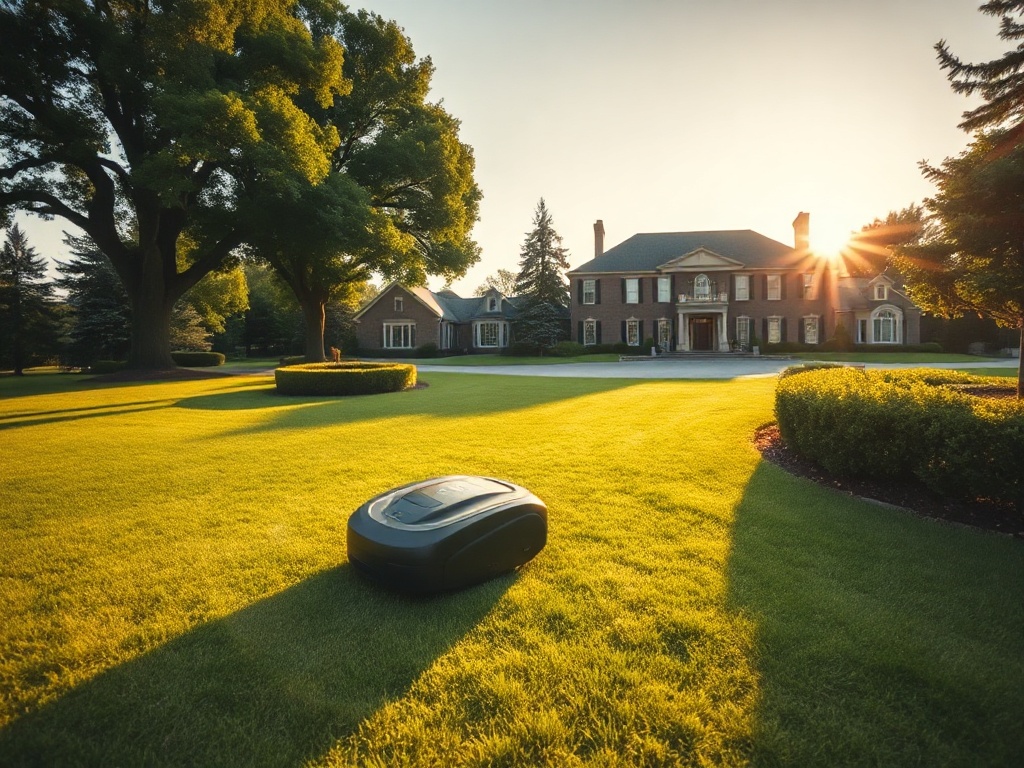
Use the guide as an estate operating checklist
A robot is only as dependable as the site map, exclusion rules, schedule, and handoff around it. Start with the broadest safe lawn panels, document the route, and expand zone by zone.
1. Survey the property
Separate broad lawn panels from formal beds, topiary, guest routes, pool surrounds, slopes, woodland edges, and event areas.
2. Prove the infrastructure
Place the RTK reference station and docks, then walk every boundary, gate, corridor, slope, and signal transition.
3. Schedule around people
Give every zone a daily window, resident and event blackouts, a weather rule, and a clear recovery owner.
4. Keep a human handoff
Monitor the fleet remotely, but retain manual detail work, inspections, maintenance, and the stop decision with the grounds team.
1. Survey the estate before placing hardware
Treat the first week as commissioning, not production mowing. The goal is a map and operating envelope that a relief operator can understand without relying on property-specific tribal knowledge.
Divide the property into operating zones
- Walk broad lawn panels, driveways, orchard or woodland edges, resort guest lawns, formal garden approaches, and all planned travel corridors. Record turf height, drains, irrigation heads, curbs, fences, shade, slopes, gates, and surfaces that change after rain.
- Mark precision and detail exclusions: parterres, ornamental beds, topiary, statuary, pool decks, narrow borders, guest paths, outdoor dining, children’s areas, and lawn sections used for weddings or other events. Keep these operator-managed unless testing proves the autonomous boundary safe and repeatable.
- Measure the acreage that can actually be cut in the available quiet or closed-property window. A manufacturer coverage rating is a scheduling input, not a promise that one machine can cover disconnected zones, slopes, and guest areas in one cycle.
Place the RTK reference station and docks
- Mount the RTK reference station on a fixed, secure point with broad sky visibility, such as a service building roof or dedicated pole. Keep it clear of mature canopy, new structures, temporary event frames, and reflective surfaces that can disrupt the signal.
- Place each charging dock on a firm, level, drained approach with service access and a clear route from its assigned zone. Distributed docks reduce dead-head travel and keep a mower from crossing a guest drive or public path to recharge.
- Label the dock, power isolation, mower, and zone ID. Photograph the as-built positions so later landscaping, fencing, construction, or event infrastructure can be checked against the original map.
Map conservatively and test the handoff
Map each lawn panel as its own zone, with safe corridors and no-go areas separate from the cutting boundary. Start with a generous exclusion; expand only after a slow supervised pass confirms that the mower clears beds, irrigation, drains, furniture, gates, and guest routes.
| Commissioning step | What to verify | Pass condition |
|---|---|---|
| Reference signal | RTK status at the dock, center of each lawn, tree cover, building shadow, and far boundary. | Stable navigation at every planned route and zone transition. |
| Detail exclusions | Formal beds, guest areas, pool edges, paths, statuary, irrigation, and event furniture are outside the route. | No deck or wheel enters a precision area during a slow supervised pass. |
| Dock handoff | Leave the zone, travel the corridor, enter the dock, charge, and resume the next assigned zone. | Unit returns without a manual push, missed gate, or resident-route crossing. |
| Obstacle behavior | Use an approved test object and confirm bumper, obstacle-avoidance, lift, and tilt behavior. | Cutting stops or diverts as documented and records a clear event. |
| Operator handoff | Second operator repeats launch, pause, emergency stop, recovery, and manual-detail instructions. | Both operators can explain the map, blackout, weather, and escalation rules. |
2. Schedule daily mowing around residents and events
Estate mowing should be frequent and light, but never blind to occupancy. Build the schedule around guest experience, turf recovery, quiet hours, and enough spare capacity to recover from weather.
| Estate zone | Starting cut plan | Operating window | Scheduling notes |
|---|---|---|---|
| Broad private lawn | Use the estate agronomist’s target height and frequent light passes. | Overnight or early morning when residents and guests are least likely to enter. | Keep a buffer around patios, play areas, pools, and any temporary furniture. |
| Resort guest lawn | Match the resort’s turf standard and use the smallest practical daily cut. | Before guest arrival or after the lawn closes; coordinate with housekeeping and events. | Pause for weddings, dining, recreation, landscaping deliveries, and photo or filming windows. |
| Driveway and woodland edge | Set a height suited to uneven ground and inspect traction before lowering the deck. | During low vehicle and pedestrian traffic. | Keep drive crossings, gates, steep drops, and root-exposed areas as separate exclusions. |
| Formal garden surround | Maintain only the proven turf collar outside the bed boundary. | When gardeners are not edging, planting, irrigating, or hosting guests. | Leave bed edges, topiary, statuary, and detail finish to the grounds crew. |
Keep capacity for a changed day
- Build blackout periods around resident routines, resort check-in, pool use, weddings, outdoor dining, deliveries, school or family activity, and grounds-team setup. A technically available mower that creates a guest conflict is not available capacity.
- Reserve a recovery window after each event. The grounds lead should be able to pause a zone remotely and know which other zone receives the unit next.
- Size the fleet from cuttable acreage, growth rate, quiet hours, charge time, travel corridors, and expected weather delays. Keep a manual catch-up plan rather than scheduling every unit at 100% utilization.
- Review missed strips, clippings, battery state, blade wear, route alerts, and boundary events weekly. Adjust the route or window before changing the cut height to solve a capacity problem.
3. Monitor, maintain, and pause safely
Remote visibility helps an estate manager run a distributed fleet, but it does not replace a daily walk-through. Make the dashboard, physical inspection, and stop decision part of one operating routine.
| Control | Grounds-team action | Do not launch or resume when... |
|---|---|---|
| People and access | Walk the route, confirm the lawn and corridor are empty, and check gates, guest paths, service drives, and resident access. | A person, animal, vehicle, event setup, or open public route can enter the mapped zone. |
| Weather and turf | Check rain, dew, irrigation, heat, lightning, standing water, and wheel traction before authorizing a run. | Rain is active, soil is saturated, lightning policy requires a stop, or tires could rut the surface. |
| Remote monitoring | Review location, battery, charging, route progress, signal, alerts, and return-to-dock status from the fleet dashboard. | An alert is unexplained, the unit is stranded, signal is unstable, or the selected zone changed. |
| Maintenance | Follow the manual for blade changes, deck cleaning, wheel and charging-contact inspection, battery warnings, and software updates. | The cutting system is not isolated, a safety sensor is suspect, or service history is missing. |
| Operator sign-off | Record date, unit, zone, weather, blackout status, alerts, maintenance, and operator initials. | There is no accountable operator or no clear escalation path for an emergency stop. |
Use a simple pause-and-resume rule
- Pause for rain, lightning, flooding, unsafe heat, or an occupied route. The grounds lead owns the stop decision; do not rely on a weather dashboard alone.
- Protect the surface and guests. A weather-resistant chassis can survive conditions that turf, beds, and event setups cannot. Keep mowers off saturated low spots and newly irrigated routes.
- Resume only after inspection. Confirm the zone is empty, traction is normal, no ruts or debris are present, the RTK reference station is online, and the next event blackout is understood.
- Document the recovery. Record the pause reason, dry-out time, skipped zones, manual catch-up cut, and any boundary or access change.
Keep the emergency stop accessible. Everyone working near the fleet should know how to stop a mower, isolate power, keep people clear, and contact the grounds lead. Never lift, clean, or inspect a mower until the cutting system is stopped and the manufacturer’s service procedure is followed.
Recommended platforms for estate deployments
These three recommendations cover different estate roles. CEORA and Mission Mega are commercial-platform candidates; Luba 2 AWD is adjacent consumer review context for sloped or smaller independent zones, not a substitute for commercial fleet commissioning.
Before finalizing a shortlist, use the robotic mower comparison tool to compare supported models by coverage, slope handling, navigation, and pricing. For the broader selection framework, see the full robotic mower buyers guide.
Husqvarna CEORA
Best fit for broad private lawns, resort acreage, and estate fleets where coverage, distributed docks, RTK infrastructure, and fleet oversight matter more than a single-yard setup. Treat manufacturer capacity and commercial service availability as deployment inputs to validate on site.
Read adjacent Husqvarna review → Husqvarna brand hub → Check CEORA availability →Kress Mission Mega
A practical candidate for multi-zone estates that want RTK wire-free mapping and a commercial-grade chassis across broad lawns, driveway bands, and separate guest zones. Verify dock placement, reference-station visibility, service support, and real daily capacity before scaling beyond a pilot.
Read adjacent Kress review → Kress brand hub → Check Mission Mega availability →Mammotion Luba 2 AWD
The adjacent consumer-scale AWD option for steep lawn panels, woodland edges, or smaller independent zones where all-wheel drive and wire-free mapping are useful. Do not assume its app, support model, or coverage rating matches a commercial resort or estate fleet.
Read Luba 2 AWD review → Mammotion brand hub → Check Luba 2 AWD availability →Navigation limits and manual handoffs
An estate is a living property: trees grow, beds change, guests arrive, and temporary structures move. The strongest operating plan states where autonomy ends before the first mower is deployed.
| Site condition | Operating guidance | Manual fallback |
|---|---|---|
| Tree canopy or building shadow | Test the deepest route at different times and document RTK status at every transition. | Shorten the zone, improve reference-station placement, use a supported fallback, or assign the area to an operator. |
| Formal bed or guest edge | Map a generous exclusion and inspect after planting, irrigation, furniture changes, and events. | Keep the turf collar and finish trim with the detail crew when the edge is too tight to prove safe. |
| Steep or unstable ground | Measure slope in both travel directions and test only when dry; stay below the platform’s published limit. | Leave the steep strip with a trained operator rather than trading safety margin for acreage. |
| Moving property infrastructure | Recheck zones after fencing, lighting, tents, deliveries, construction, or landscape changes. | Pause the affected zone until the map and handoff test are updated. |
Remote monitoring makes the fleet easier to supervise, but it does not make an unsuitable route suitable. The grounds crew remains responsible for precision edging, seasonal planting, topiary, event presentation, obstacle-heavy areas, and every decision that protects residents, guests, turf, and property.
Frequently asked questions
Survey every lawn panel, access corridor, slope, gate, dock approach, and exclusion first. Map each zone separately, place the reference station and docks where they remain accessible, then supervise a complete launch, zone handoff, return-to-dock, pause, and recovery test before unattended mowing.
Keep formal beds, topiary, statuary, pool surrounds, narrow borders, guest paths, event lawns, and delicate detail strips as explicit no-go or operator-managed zones. Use a conservative boundary and expand only after a supervised pass proves the mower clears the bed edge, irrigation, furniture, and pedestrian routes.
Pause during active rain, saturated conditions, lightning, unsafe heat, or any resident or guest event that occupies the route. Resume only after the grounds lead confirms the turf is firm, the zone is empty, weather and navigation alerts are clear, and the next blackout window is understood.
Place the RTK reference station with broad sky visibility, test the deepest tree-cover and building-shadow routes at different times, and keep a generous exclusion around signal transitions. Shorten the zone, use a supported fallback, or assign that section to an operator when navigation is not consistently predictable.
Keep ornamental beds, topiary and statuary surrounds, tight edges, steep or unstable drops, guest-area detail work, seasonal landscaping, obstacle-heavy routes, and any precision finish that the site survey cannot prove safe and repeatable with the autonomous platform.